
Furniture fasteners for flat-pack cabinets must be chosen joint by joint, not as a single parts list. A cabinet that ships flat and assembles with one screwdriver normally needs three different systems: a concealed cam-and-dowel connector for the carcass, shelf supports for adjustable shelving, and screws, plates or insert nuts for back panels, rails and fittings. Matching each joint to the right system, then matching that system to the panel material, thickness and packing format, is what keeps assembly repeatable at volume.
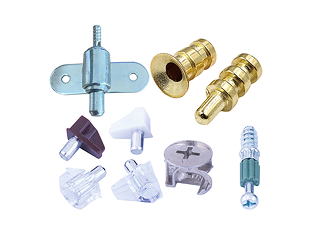
What Each Furniture Fastener Actually Does
Flat-pack cabinet hardware uses a small vocabulary, and confusing the categories early is the usual reason a specification drifts between the engineering drawing and the purchase order.
| Component | Function | Typical location |
|---|---|---|
| Cam lock with connector dowel | An eccentric cam rotates to pull and clamp a dowel head, joining two panels | Carcass side to bottom or top, fixed shelf |
| Insert nut with machine bolt | Provides a reusable internal machine thread inside a panel | Legs, rails, brackets, joints that must be reopened |
| Shelf support pin | Positions and carries an adjustable shelf, with an optional sleeve | Inside side panels, shelf height rows |
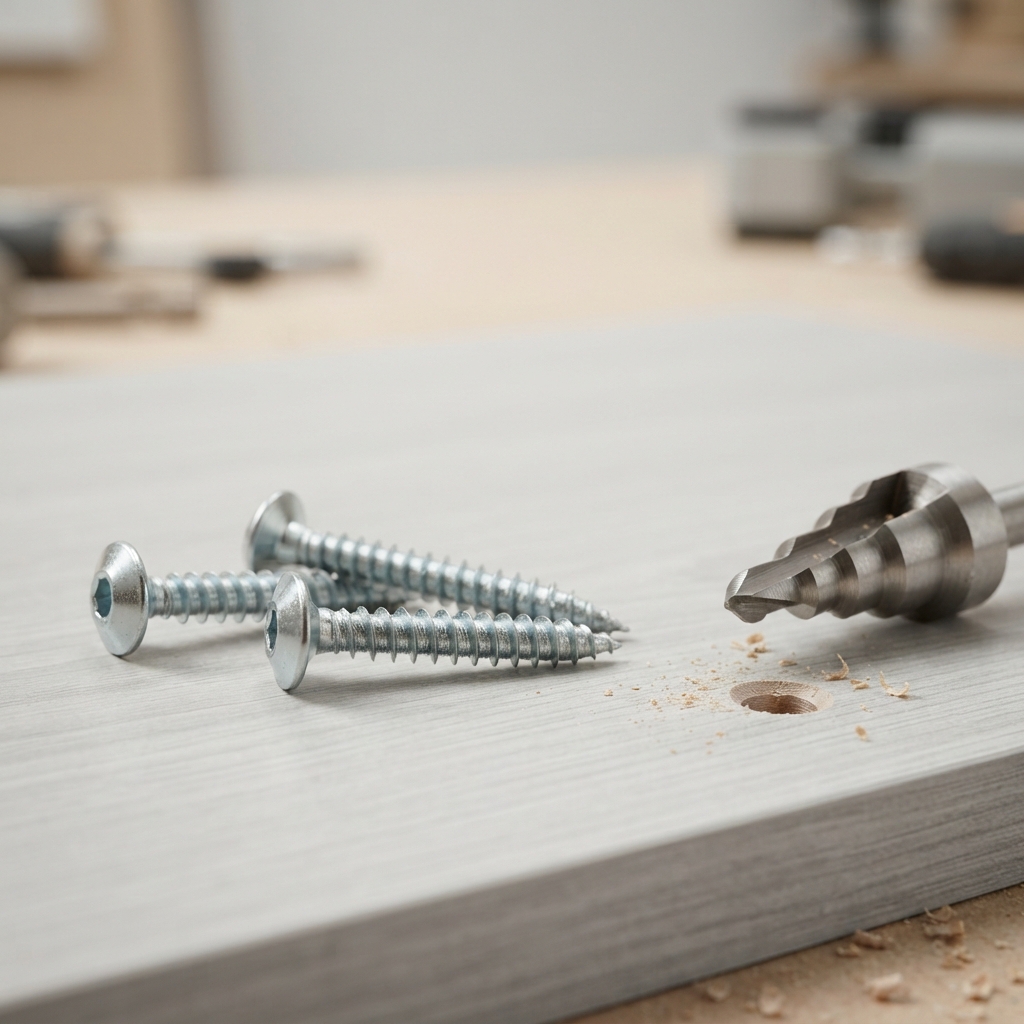
| Furniture screw (self-tapping or countersunk) | Direct fixing into a panel or thin sheet | Back panel, hinge plates, fittings, accessories |
| Stamped connector plate or bracket | Spreads load, locates panels and reinforces a corner | Corners, bed rails, plinth and base frames |
Two of those categories are systems rather than parts. A cam lock is a body that only works with a dowel whose head geometry, length and thread suit that body and that panel bore. An insert nut is a body with an internal thread that only works with the bolt and pilot hole it was checked against. Specifying either one by its thread size alone leaves the most important half of the joint undefined.
Step 1: Map the Joints Before You Request a Quote
A joint map is a one-page table of every connection in the cabinet. It answers six questions per joint, and it turns a vague request for "cabinet connectors" into something a supplier can quote without guessing:
- Is this joint structural, or does it only locate a panel?
- What is the actual panel material and finished thickness at this interface?
- Will the cabinet be disassembled more than once, for relocation or service access?
- Which faces of the joint are visible after assembly?
- Which tool will the factory line use, and which tool will the end customer use?
- How will the parts be counted, identified and packed per carton?
Most flat-pack assembly problems trace back to a joint whose answer to one of these questions was never written down.
Step 2: Match the System to the Joint
Once the joint map exists, selection becomes a matching exercise rather than a preference debate.
| Joint | Usual system | What to confirm |
|---|---|---|
| Carcass side to bottom or top | Cam lock plus connector dowel | Face bore diameter and depth, edge-hole position, dowel head form, cam orientation mark |
| Fixed shelf or divider | Cam lock set, or connector bolt with insert nut | Whether the shelf is load-bearing, tightening access from inside the carcass |
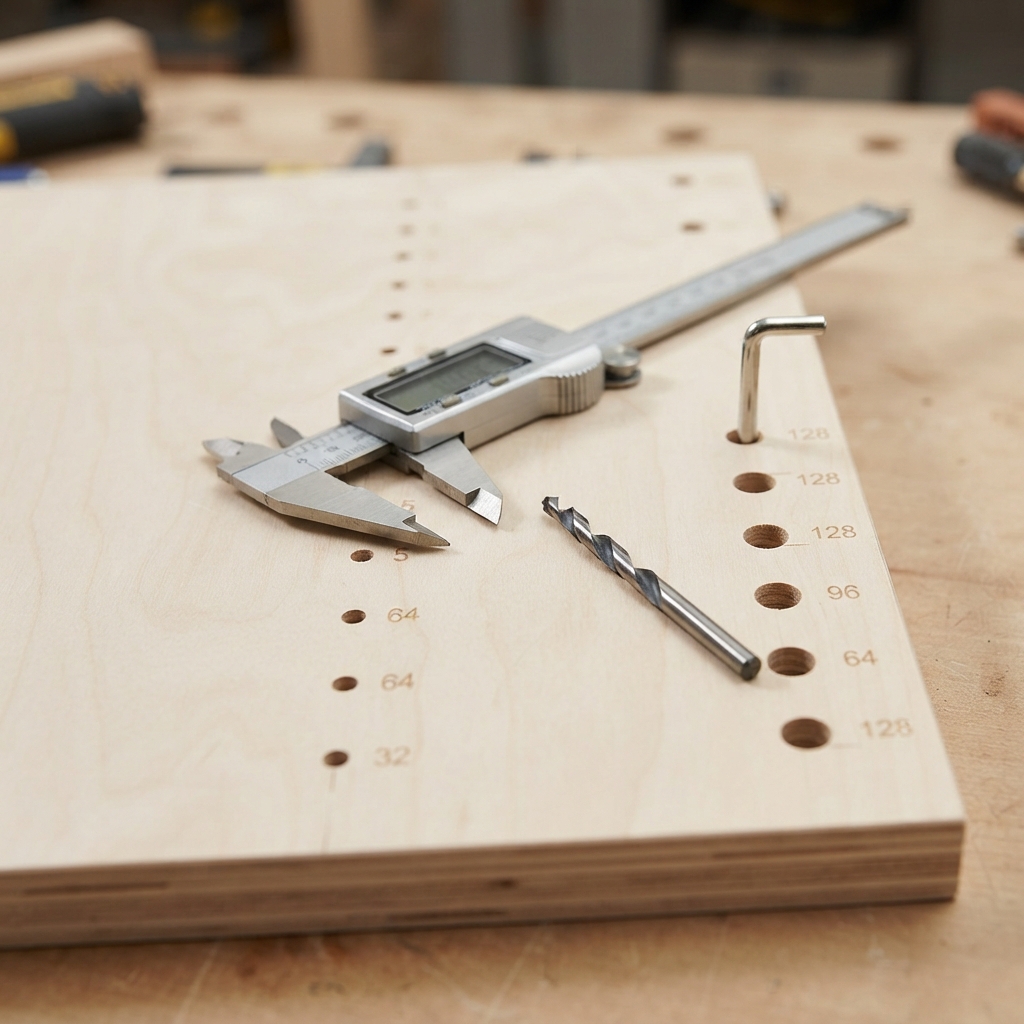
| Adjustable shelf | Shelf support pin, sleeve optional | Pin diameter and length against panel thickness, hole pitch, sleeve colour |
| Back panel | Countersunk self-tapping screws | Head clearance, panel thickness, whether staples or nails are also used |
| Rails, legs, plinth, brackets | Machine screws with insert nuts, or stamped plates | Thread size, insert depth, plate thickness, hole position |
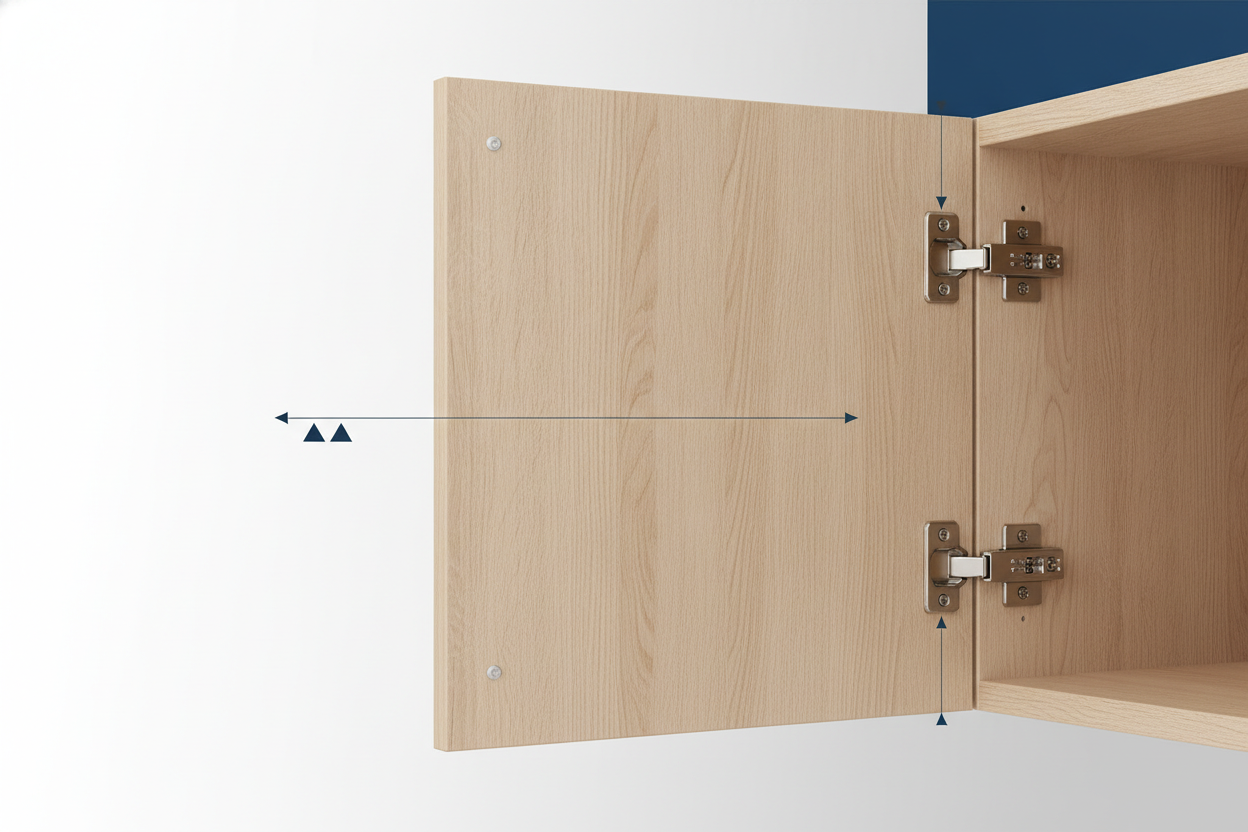
| Hinges and fittings | Machine screws into insert nuts, or direct screws | Screw length, head style, adjustment access after mounting |
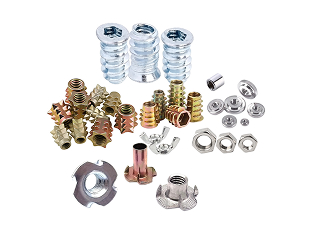
Cam Lock or Insert Nut?
The decision is usually about access and repetition, not strength. A cam lock clamps two panels through a face bore, hides completely once assembled, and is tightened once during installation. An insert nut gives you a real machine thread that can be opened and closed many times, which matters for anything the owner will move, service or re-level. If the cabinet is assembled once in a bedroom and never touched, cam locks are the simpler answer. If it is a shop fixture, a bed frame or a modular system that gets rebuilt, specify insert nuts where the joint must reopen.
Why Screws Alone Are Not a Carcass Joint
Direct screws are the cheapest and fastest option, and for back panels and fittings they are often the correct one. They are a poor main carcass joint in particleboard and MDF because the load sits on a narrow edge section, and repeated disassembly enlarges the hole each time. Keep the structural corners on a clamping or threaded system.
Step 3: Check the Panel, Not Just the Fastener
The same cam and dowel pair behaves differently in particleboard, MDF and plywood. Particleboard chips out around a bore, MDF deforms under edge pressure and swells if moisture reaches the core, and plywood presents alternating layers that a dowel thread may enter at an angle. Before approving furniture fasteners for a cabinet, confirm the bore diameter and depth against the finished panel thickness, and check how much material remains between the bore and the panel face. A bore that leaves a thin wall will fail in service no matter how good the cam is. On melamine- or foil-faced panels, treat every bore and edge hole as an exposed core path as well, because that is where chipping and moisture damage begin.
Step 4: Prove Strength on the Joint, Not the Part
Cam body hardness says very little about whether a cabinet joint holds. The load path runs from panel to bore wall to cam to dowel to the second panel, so the weakest element is usually the board around the bore rather than the hardware itself. If your program carries a formal furniture test requirement, agree the method before production. ISO 7170:2021 sets out test methods for the strength, durability and stability of storage units assembled ready for use (ISO, 2021). It is a method standard, not a pass mark: the acceptance criteria come from your own product specification or your retailer's requirements.
For an internal check, a pull-apart and racking trial built on production panels, repeated across three separate lots, will surface more real assembly failures than any single certificate.
Step 5: Balance Assembly Speed, Appearance and Service Access
Installation efficiency is decided by details that never appear on a price list: whether the drive recess accepts the bit the line already uses, whether the orientation mark is visible at the cam access angle, and whether the whole cabinet closes with one tool. Mixing cross, hex and Torx drives on one model adds a tool change to every unit.
Appearance splits into concealed and exposed hardware. Cam bodies and connector dowels disappear inside the panel, so colour consistency matters mainly against your approved sample. Shelf pins, connector caps and visible brackets stay on show, and there the finish and colour match become part of the product finish rather than a purchasing detail.
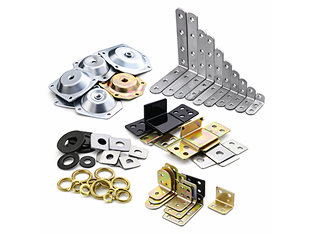
Step 6: Lock Down Packaging and Kit Accuracy
Most flat-pack hardware complaints are about count, identification and protection, not dimensions. Define the packing rules at the same time as the part: pieces per bag, bags per carton, bag film or blister format, label content with model and part reference, and the order in which the customer opens each bag. Small bags suit retail cartons, blisters suit hanging display, boxes and buckets suit bulk and site supply. Whichever format you choose, the kit should be counted and verified as a bill of materials, not assembled from loose stock at the end of the line. The same rules apply whether the buyer is a flat pack furniture hardware distributor or a factory kitting its own cartons.
Step 7: Keep Consistency Across Repeat Orders
Repeatability rests on four controls: a frozen specification tied to a drawing revision, a retained approved sample, lot identification on bag and carton, and a written inspection criterion covering dimensions, thread fit, cam engagement, colour and count. If the resin, plating line, tool or supplier of a sub-component changes, that is a new approval, not a production detail. This is the same discipline that keeps a screw program stable, and it applies just as directly to furniture fasteners supplied as matched cam and dowel sets.
Common Selection Mistakes
- Choosing a cam body by thread size. The cam is defined by its bore and dowel interface, not by a thread callout.
- Buying cam and dowel from different sources without a mating check. Two parts that each meet their own drawing can still fail to clamp together.
- Specifying "MDF screws" without bore and edge control. The installation detail decides the result more than the screw name does.
- Treating packaging as an administrative step. A correct part in a wrongly counted bag still generates a claim.
- Assuming one fastener family covers the whole cabinet. Structural corners, adjustable shelves and back panels have different jobs.
How to Evaluate a Furniture Hardware Supplier
Buyers comparing a furniture hardware supplier for a flat-pack program should separate manufacturing from trading. Ask who actually cold-heads the dowel, molds the cam housing and assembles the kit, and visit the process rather than the catalogue. Then check engineering behaviour: does the supplier review your joint section and panel drawing before quoting, and will it build the sample on your production panel rather than a substitute board? For OEM furniture hardware and custom furniture hardware developed from drawings, three further points matter — whether tooling and revision control are documented, whether packing and labelling are produced in-house, and whether a repeat order is matched against a retained approved sample rather than a new production batch.
What to Send With a Fastener RFQ
A quotation for furniture fasteners is only as precise as the input it is based on. Send the joint section drawing or a sample, the panel material and finished thickness, the mating parts already fixed in the design, the required finish, annual and trial quantities, the packing format, and any test or market requirement. If several components belong to one cabinet model, send the complete hardware bill of materials rather than one line at a time, because compatibility between the cam, dowel, insert nut and screw is where most rework originates.
Furniture Fasteners We Supply for Flat-Pack Programs
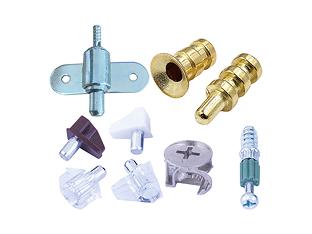
JHFIX supplies cam lock systems, connectors, shelf supports, screws, nuts, stamped parts and hardware packaging. Manufacturing is carried out by Jiangmen Jinhe Hardware Products Co., Ltd., which has operated since 2004 and runs cold heading, tapping, punch press, injection molding, assembly, packing and inspection in-house; international sales are handled by its authorized export partner, Jiangmen Shenxin Trading Co., Ltd. The current range includes the following components for cabinet and flat-pack assembly, all reviewed against a drawing or approved sample:
- Silver Furniture Eccentric Cam Lock: a round silver cam body with a screwdriver recess and orientation marking, intended for knock-down cabinet panels and wardrobe or shelving joints. Cam geometry, bore and mating dowel are confirmed against the joint drawing. Available in furniture hardware with matched connector dowels.
- Brown Rafix Cam Connector with Steel Dowel: a brown U-shaped polymer cam housing with a cross-drive metal cam and short steel dowels carrying coarse panel-engagement threads, offered in M6.2 × 16 mm, 17 mm and 19 mm.
- Tapered Hex-Drive Wood Insert Nut: an M6 internal thread in zinc alloy with a low flange, internal hex drive and coarse interrupted external ribs, driven into a prepared panel hole to give a reusable thread for a mating bolt. Listed under nuts and insert nuts.
- Furniture Shelf Support Pins with Optional Sleeves: 25 mm metal pins with a pointed self-tapping thread and M4.5 thread size, supplied with optional coloured sleeves.
Back-panel and fitting screws are covered in the screw range, and counted bags, blisters, boxes and buckets are produced under hardware packaging. For a wider view of how these components fit together, see our guide to fasteners for furniture manufacturing.
FAQ
Which fasteners are used in flat-pack cabinets?
Most flat-pack cabinets combine cam locks with connector dowels for the carcass, shelf support pins for adjustable shelves, and countersunk self-tapping screws for back panels and fittings. Rails, legs and brackets often use machine screws with insert nuts or stamped plates. The exact mix depends on the joint map, panel material and whether the cabinet must be disassembled again.
Are cam locks stronger than insert nuts?
They carry load differently rather than ranking above each other. A cam clamp spreads its force across the bore wall of both panels and hides inside the joint, while an insert nut concentrates load into the thread and the material around the pilot hole but allows repeated opening. Test the actual joint in production panels before choosing on strength grounds.
What is the difference between a cam lock and a Rafix connector?
A Rafix-type connector uses a polymer housing with a cam that captures a steel dowel, so the cam sits in a molded pocket rather than a plain bore. Plain cam locks use a metal or polymer body in a drilled bore. The housing changes the pocket dimensions and the dowel projection, so the two types are not interchangeable without checking the drilling pattern.
Which fasteners suit MDF and particleboard cabinets?
Both materials accept cam and dowel systems and self-tapping screws, but the bore and edge distance must match the board. MDF needs tighter control of pilot-hole size and insertion force, and particleboard needs sufficient material left around the bore to resist chipping. Confirm the specification in the exact board and thickness used in production, not in a substitute sample.
Can one fastener type be used for the whole cabinet?
It can be made to work, but it usually costs more than it saves. Structural corners need clamping or threaded hardware, adjustable shelves need pins, and back panels need screws. Forcing one family across all three either over-specifies the simple joints or under-specifies the structural ones.
How should hardware quantities be set for a cabinet kit?
Derive the count from the hardware bill of materials for one cabinet model, add a defined spare allowance if your market expects it, and verify the packed count by weight or by counted bag before cartoning. Piece count and weight count are different controls, and a kit specification should state which one governs acceptance.
What information is needed to quote a custom furniture fastener?
Send the drawing or a physical sample, the panel material and thickness, the mating component, the required finish, trial and annual quantities, the packing format, and any test or destination-market requirement. Where a joint is new, include a section view showing bore positions and panel interfaces.
Conclusion
Choosing furniture fasteners for flat-pack cabinets comes down to sequence: map the joints, match a system to each one, check the panel interface, prove the joint on real boards, then fix the packing and repeat-order controls before the first production run. Cam locks, insert nuts, shelf supports, screws and stamped plates each solve a specific problem, and the cheapest reliable program is the one where none of them is asked to do a job it was not specified for.
If you are developing a cabinet or flat-pack program, send your joint drawings, samples or hardware bill of materials to our engineering team through the contact page to review component fit, panel interfaces and packing format before you commit to tooling.